
Plastic Recycling Codes Explained: What 1–7 Mean, and What Makes a Container Microwave- or Freezer-Safe
What plastic recycling codes 1 to 7 mean under ASTM D7611 and IS 14534, why the code is not a safety mark, and what makes containers microwave- or freezer-safe.
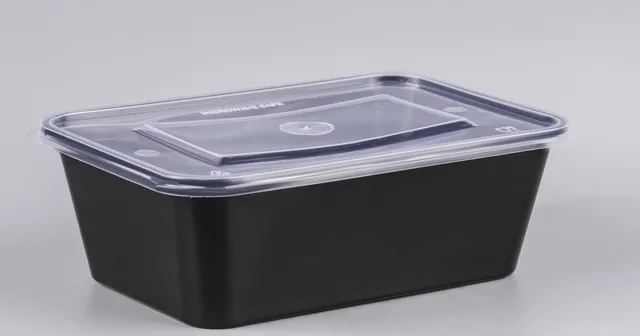
In this guide
The number moulded into the base of a plastic container, inside a triangle, is a resin identification code. It tells you which polymer the container is made of: 1 is PET, 2 is HDPE, 3 is PVC, 4 is LDPE, 5 is PP, 6 is PS, and 7 is everything else. It does not tell you whether the container will be recycled where you live, whether it is food grade, or whether it can go in a microwave or a freezer.
This guide explains where the codes come from, what the Indian rules say about marking them, and what actually decides whether a container is microwave-safe or freezer-safe.
Key takeaways
- Resin codes 1 to 7 identify the polymer. ASTM says the system is "solely dedicated to identifying resin content, rather than product recyclability".
- In India, IS 14534 asks manufacturers to mark the code, and the Plastic Waste Management Rules require recycled plastic packaging to be labelled with its recycled content.
- Microwave-safe depends on the polymer's heat resistance, the grade and its migration testing, the wall and the food. The code alone cannot tell you.
- Freezer-safe depends on whether the plastic turns brittle in the cold. PE stays tough far below freezer temperature. Plain PP homopolymer does not, and impact-copolymer PP does.
- The glass-and-fork symbol is defined in EU law. We have not found an Indian or EU legal definition for the microwave or snowflake pictograms.
Where the codes come from
The Society of the Plastics Industry in the United States created the code in 1988 and began working with ASTM International in 2008 to maintain it. It became ASTM D7611 in 2010, according to ASTM. A 2013 revision replaced the old "chasing arrows" with a plain equilateral triangle, because people read the arrows as a promise that the item would be recycled. ASTM's announcement of that revision says the system "was originally developed and continues to be solely dedicated to identifying resin content, rather than product recyclability".
India adopted the same numbering in IS 14534:1998, Guidelines for recycling of plastics. Clause 6.1 says manufacturers of plastic end products, from virgin or recycled material, "shall mark the symbol at the time of processing" to help reprocessors identify the raw material. When the code is 7, the actual material, such as ABS or polycarbonate, is to be written below the symbol. The same standard says recycled plastics shall not be used for products that touch food, medicines or drinking water. The later FSSAI allowance for recycled PET is covered in the food grade plastic containers guide.
What the Indian rules require on the pack
The Plastic Waste Management Rules, 2016 deal with marking in Rule 11. Rule 11(1) requires carry bags, plastic packaging and multi-layered packaging to carry the name and registration number of the producer or brand owner, as the consolidated text shows. The 2024 amendment (G.S.R. 744(E), 14 March 2024) requires recycled plastic packaging to carry the label "recycled having [percentage] of recycled plastic" and to conform to IS 14534:2023, per the amendment text. A further amendment notified on 31 March 2026 revisits the same rule, as LiveLaw reported. Read the current gazette text before you finalise artwork.
In short: the resin code comes from the standard. The recycled-content label and your registration details come from the Rules. Your EPR obligations are a separate matter, covered in the EPR registration guide.
The seven codes at a glance
The uses below are the ones ASTM gives for each resin. The heat figures are differential scanning calorimetry (DSC) measurements from a 2024 study in Environmental Science and Pollution Research, except the PET glass transition, which comes from a review in Environmental Chemistry Letters.
| Code | Polymer | Typical packaging uses | Heat behaviour | Cold behaviour |
|---|---|---|---|---|
| 1 | PET | Beverage bottles, food jars | Amorphous (clear) PET softens at its glass transition, 67 °C; melts near 240 °C | Rigid; check impact at low temperature with the supplier |
| 2 | HDPE | Milk, cosmetic and detergent bottles, retail bags | Melts near 125 °C | Stays tough far below freezer temperature |
| 3 | PVC | Blister packs, clamshells, deli and meat wrap | Glass transition near 80 °C | Ask the supplier for test data |
| 4 | LDPE | Frozen-food bags, produce bags | Melts near 109 °C | Stays tough far below freezer temperature |
| 5 | PP | Yoghurt, takeaway and deli containers | Melts near 160 °C | Homopolymer turns brittle around 0 °C; impact copolymer stays tough |
| 6 | PS | Protective packaging, bottles, food containers | Glass transition near 104 °C | Hard and "rather brittle" even at room temperature |
| 7 | Other | Polycarbonate, ABS, multi-layer materials | Varies with the material | Varies with the material |
Two limits to this table. First, melting is not the temperature at which a container stops being usable. A thin-walled pack starts to sag well below its melting point. Second, the code names a polymer family, not a grade. Two containers marked "5" can behave very differently in a freezer.
What makes a container microwave-safe
Five things decide it, and the resin code only hints at the first.
The polymer's heat resistance. The chart shows why PP is the usual choice for reheatable packs. It melts near 160 °C, while clear PET and PS soften below or near the boiling point of water.
The grade and its migration testing. A food-contact plastic is approved by testing how much of it moves into food, not by its code. In India, that means the Schedule III standards and migration limits under FSSAI's packaging regulations, set out in the food grade plastic containers guide. In the EU, Regulation (EU) No 10/2011 sets an overall migration limit of 60 mg/kg of food and requires a declaration of compliance for plastic food-contact materials. A US FDA article on plastics and the microwave says the agency looks at how much of a substance is expected to migrate into food and how toxic it is.
The container's design. The same FDA article says carryout containers and margarine tubs "may melt or warp". University of Illinois Extension advises against reusing containers from microwavable ready meals, because they are made for a single use and repeated heating makes them less safe. A thin single-use tub and a thicker reusable box can be the same polymer and still behave differently.
The food. Illinois Extension notes that fattier foods, such as meat and cheese, are more likely to cause chemicals to leach from a container than less fatty foods. CSIRO says migration is more likely in hot fatty foods and prefers glass for heating them. In Indian terms, a pack that reheats plain dal without trouble may not suit a dish rich in ghee or oil.
The label. "Microwave-safe" is a manufacturer's claim. CSIRO notes that there are no standards for claims such as "microwave-safe" and says to refer questions to the manufacturer. Ask what the claim is based on: which grade, and what heating and migration testing supports it.
For takeaway packs that customers reheat, the restaurant packaging guide covers the wording worth printing on the pack.
What makes a container freezer-safe
Freezer-safe comes down to one property: whether the plastic becomes brittle at freezer temperature. The key figure is the glass transition. Below it, the amorphous part of the plastic goes glassy and the container cracks on impact instead of flexing.
PE (codes 2 and 4) handles cold well. A 2021 study in Polymers reports that polyethylene is known for good frost resistance, with a ductile-to-brittle transition below −73 °C. Every HDPE sample it tested stayed below −70 °C.
PP (code 5) depends on the grade. The glass transition of isotactic PP homopolymer is about 0 °C, which is above freezer temperature. Research in the International Journal of Molecular Sciences reports that homopolymer has poor impact resistance at room and low temperatures. Impact copolymers overcome this with a dispersed ethylene-propylene rubber phase whose glass transition is typically −40 to −50 °C. That is why "PP" on a quotation is not enough for an ice cream tub.
PS (code 6) is already glassy at room temperature. General-purpose polystyrene is described as "hard and rather brittle" in a 2022 study in Molecules. The same study found it became significantly brittle and broke into pieces after contact with cream and olive oil. High-impact PS adds rubber to overcome that.
PET (code 1) has its glass transition well above room temperature, so it is rigid in the cold. How a particular PET pack handles a knock at −18 °C depends on its design and thickness. Ask for test data, or test samples yourself.
The cold chain those packs have to survive is covered in the ice cream and dairy containers guide. It includes FSSAI's −18 °C storage figure and the colder hardening temperatures ice cream makers use.
The symbols, and what they legally mean
| Symbol | What it is | Legal status |
|---|---|---|
| Number in a triangle | Resin identification code | Defined by ASTM D7611 and IS 14534; identifies the polymer only |
| Glass and fork | "For food contact" | Defined in EU law, Regulation (EC) No 1935/2004 |
| Wavy lines, often over a dish | Microwave use | A manufacturer's claim; no defining standard found |
| Snowflake | Freezer use | A manufacturer's claim; no defining standard found |
| "Recycled having x% recycled plastic" | Recycled content | Required in India for recycled plastic packaging under the PWM Rules |
Glass and fork. Article 15 of Regulation (EC) No 1935/2004 requires food-contact materials to be labelled with an indication of use, such as "soup spoon", or with the appropriate symbol, as the European Commission's summary of the legislation explains. The Commission's working document on food-contact symbols adds that the words "for food contact" or the symbol can be left off when it is obvious the article is meant for food. The symbol declares what the item is intended for. It is not a test certificate. We have not found an equivalent status for the symbol under Indian food law. In India, food-contact compliance rests on the FSSAI packaging regulations and the documents behind them.
Microwave and snowflake. We have not found an Indian or EU regulation that defines either pictogram. CSIRO notes that no standard exists for "microwave-safe" claims. Treat both as the manufacturer's declaration and ask what testing supports them.
Questions buyers ask
Does code 5 mean a container is microwave-safe?
No. It means the container is polypropylene. PP's heat resistance makes it the usual base for microwave-safe packs, but the claim also depends on the grade, its migration testing and the container's design. Look for a microwave label, and ask the supplier what it is based on.
Is a lower number better or safer?
No. The numbers identify polymers. They are not a ranking of safety, quality or recyclability.
Does the chasing-arrows triangle mean the pack will be recycled?
No. ASTM moved to a plain triangle in 2013 precisely because the arrows were read as a recycling promise. Whether a pack is recycled depends on local collection and the markets for that material.
Why does my supplier's container say "5" and still crack in the freezer?
The code does not tell a homopolymer from an impact copolymer. Ask the supplier which grade the part is moulded in.
Ordering containers with the right grade
We mould food packaging at our Dadra works in food-grade PP, HDPE and clear PET. Per-product material isn't listed for every family, so check the code on the base or ask us which grade suits your fill temperature, freezer or microwave use. New customers can start with a low MOQ on a first order. Browse sweet and dry-fruit containers, dairy and ice cream containers and the restaurant pack range, or tell us what you are packing.
Tell us the product, the quantity and the city it ships to.
We reply from the Dadra works with part options and a wholesale quote, usually within one business day.
Keep reading
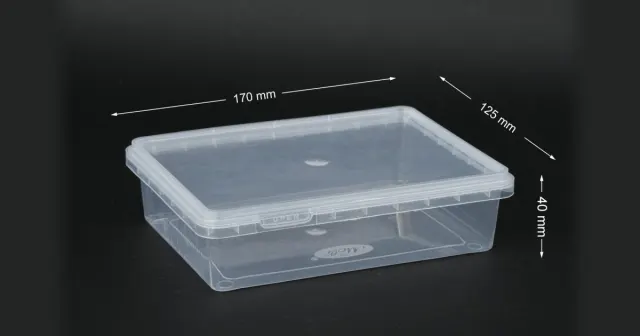
Food Grade Plastic Containers: How to Choose the Right Container for Your Business
What food grade means under FSSAI rules in India, which plastics suit hot, cold and frozen foods, and the documents to ask a supplier for.
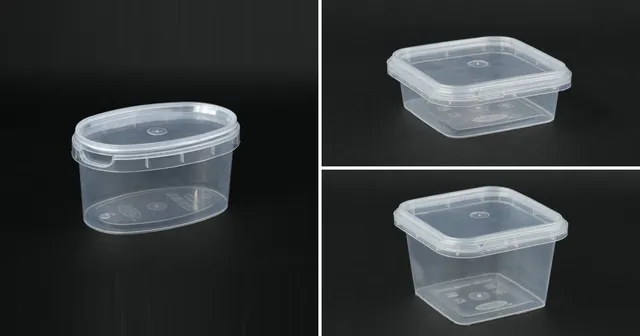
Ice Cream Containers and Dairy Packaging: Choosing Freezer-Grade Tubs for Ice Cream, Curd, Shrikhand, Paneer and Ghee
How to choose ice cream and dairy containers: plastics that stay tough at −18 °C, heat shock, freezer stacking, lid fit, tamper evidence and FSSAI rules.
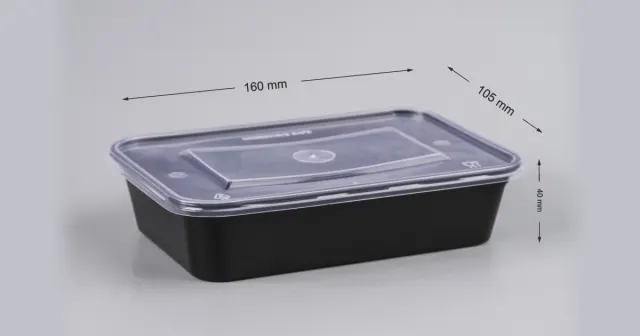
Restaurant Packaging Containers: Best Plastic Packaging for Takeaway & Food Delivery
Choose takeaway containers by menu item: leak resistance, stacking, capacities from 300 to 1000 ml, dosa boxes, and the rules that apply in India.