
EPR Registration for Plastic Packaging: Who Must Register, Targets and Deadlines
Who needs EPR registration for plastic packaging, how the CPCB portal works, Category I targets, certificates, returns and labels, as of September 2026.
In this guide
- Where the rules come from
- Who is a PIBO, and who is not
- The categories
- How big the obligation is
- Registering on the portal, step by step
- Certificates and the annual return
- What goes on the pack
- Environmental compensation
- Who does what: the brand and the container maker
- Questions buyers ask
- Before you order
Extended Producer Responsibility, or EPR, is the rule that the business putting plastic packaging on the Indian market pays for what happens to it afterwards. For a dairy selling curd in a branded tub, a mithai brand, or the moulder who makes their containers, it means registering with the pollution control boards, declaring tonnages, buying recycling certificates and filing a return every year.
This guide sets out the rules as of September 2026, sourced to the government documents themselves, with the emphasis on rigid food containers. It is not legal advice. The rules have been amended six times since the EPR framework arrived in 2022, so check the current text and your state board before acting.
Key takeaways
- Producers, importers and brand owners (PIBOs) register on CPCB's centralised portal. Operate in more than two states and CPCB registers you; in one or two, your State Pollution Control Board does.
- Since the March 2024 amendment, a container moulder is a "producer", and micro and small producers must register too. Micro and small brand owners are outside the EPR obligation.
- Rigid containers are Category I. The target has been 100% of the eligible quantity since 2023-24, and at least 70% of it must be recycled in 2026-27.
- Category I packaging must carry 40% recycled plastic in 2026-27, rising to 60% from 2028-29. That doesn't apply where a law such as an FSSAI regulation doesn't permit recycled plastic, and you have to cite that law in your annual return.
- The FY 2025-26 annual return for PIBOs is due by 31 December 2026, under a Ministry extension.
Where the rules come from
EPR sits inside the Plastic Waste Management Rules, 2016. The detailed obligations are in Schedule II, the "Guidelines on Extended Producer Responsibility for Plastic Packaging", which the Ministry of Environment, Forest and Climate Change inserted by notification G.S.R. 133(E) of 16 February 2022. They took effect immediately and apply to both pre-consumer waste (rejects from manufacturing and filling) and post-consumer waste.
Who is a PIBO, and who is not
Three obligated roles matter to packaging buyers. The rules also cover plastic raw material suppliers, and the recyclers and other processors who issue certificates.
| Role | What the rules say | In food packaging, typically |
|---|---|---|
| Producer | A person manufacturing plastic packaging, including intermediate material, and anyone contract-manufacturing products in plastic packaging for a brand owner | The container moulder; a co-packer filling under someone else's brand |
| Importer | Anyone importing plastic packaging, packaged goods, or plastic raw material for commercial use | A dates importer; a buyer of imported tubs |
| Brand owner | "A person or company who sells any commodity under a registered brand label or trade mark" | The dairy, mithai brand or snack company whose name is on the pack |
The producer and importer definitions are the ones substituted by the Plastic Waste Management (Amendment) Rules, 2024. Before that, "producer" in the EPR guidelines meant makers of carry bags, multilayer packaging and plastic sheets, which is why older explainers leave rigid-container moulders out.
The micro and small enterprise carve-outs
- Brand owners. Paragraph 4 of Schedule II, as amended in 2024, puts brand owners under EPR "other than micro and small enterprises as defined under the Micro, Small and Medium Enterprises Development Act, 2006". CPCB's FAQ on registration says the same thing: micro and small brand owners are exempted from fulfilling the EPR obligation.
- Producers. Micro and small producers must register, as the 2024 amendment spells out. Their collection and recycling target moves to whoever sold them the plastic raw material, but "the target for use of recycled plastic content shall be fulfilled by such producers".
- No tonnage threshold. We found no minimum tonnage in Schedule II. The carve-outs depend on enterprise size, not volume.
Take a sweet shop selling mithai in containers printed with its own name. It is a brand owner only if that name is a registered brand label or trade mark. Even then, a micro or small enterprise under the MSMED Act is outside the obligation. The registration list in paragraph 6.1 names brand owners without repeating the size carve-out, though, so check with your State Pollution Control Board before assuming you need no account. Your Udyam classification settles which size band you are in.
The same FAQ adds that a third-party manufacturer without its own brand passes the liability to the brand owner or producer it sells to (FAQ 22), and that export-oriented units are exempt (FAQ 26).
The categories
Schedule II divides plastic packaging into categories, and every target is set category by category.
| Category | Covers |
|---|---|
| I | Rigid plastic packaging |
| II | Flexible packaging, single or multilayer (plastics only), sheets, covers, carry bags, sachets, pouches |
| III | Multilayered packaging with at least one layer of plastic and one of another material |
| IV | Sheets, carry bags and commodities of compostable plastic |
| V | Sheets, carry bags and commodities of biodegradable plastic (added 2024) |
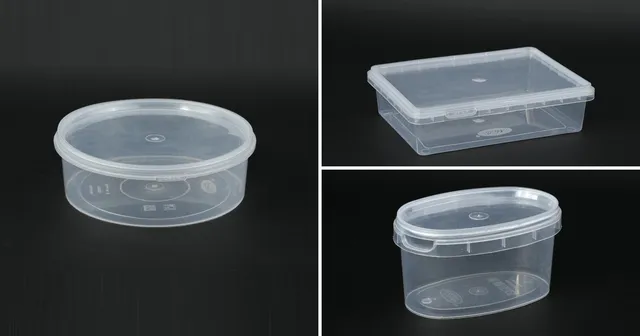
Moulded sweet boxes, dairy tubs, namkeen containers and takeaway containers are rigid plastic packaging, which puts them in Category I. One practical question to raise with your adviser: a printed shrink sleeve is a film in its own right, so ask how it should be declared.
How big the obligation is
Everything starts with an "eligible quantity" in tonnes, worked out category by category. For a brand owner it is the average weight of virgin plastic packaging bought and put on the market over the last two financial years, plus average pre-consumer waste. For a producer it is the average sold plus pre-consumer waste, minus what it supplied to obligated brand owners the previous year. That deduction is how the obligation passes from the moulder to the brand.
The target has been 100% of that quantity since 2023-24, after 25% in 2021-22 and 70% in 2022-23. Collected waste can be recycled or sent for end-of-life disposal (co-processing, waste-to-energy, waste-to-oil, roads). A rising minimum share has to be recycled, though. For Category I that is 50% in 2024-25, 60% in 2025-26, 70% in 2026-27, and 80% from 2027-28.
Recycled content in the packaging itself
The 2026 amendment, G.S.R. 237(E) of 31 March 2026, restated the tables for mandatory recycled plastic in packaging.
Two provisos matter for food containers. The targets "shall not be applicable" where a law, an FSSAI regulation or a mandatory Indian Standard doesn't permit recycled plastic, and you name that law in your annual return. And for food-contact packaging, a 2025-26 shortfall can be carried over up to three years from 2026-27, clearing at least a third each year. Read together, food contact is not exempt by default, only where a specific rule bars recycled material. The food grade guide explains how narrow FSSAI's recycled-PET allowance is.
Reuse targets for larger rigid packs
Brand owners also have Category I reuse targets by pack size. For 0.9 to under 4.9 litres or kg, it is 10% in 2025-26 rising to 25% from 2028-29. Most sweet, dairy and takeaway containers sit below 0.9 litre, but a 1000 ml or 1200 ml tub falls in that band. Larger packs have separate targets, and the same legal-exemption proviso applies.
Registering on the portal, step by step
Who registers you depends on your footprint. PIBOs operating in one or two states or union territories are registered by the State Pollution Control Board, and those in more than two by CPCB. Both work through the same centralised portal, which now runs as CPCB's Common EPR Portal. Its PIBO registration manual describes the application like this:
- Onboard. Log in to the Common EPR Portal, choose Plastic Waste Management, then PIBO, then Producer, Importer or Brand Owner.
- Part A, general information. Company PAN, CIN (companies only) and GST uploads, the authorised person's PAN, plant addresses, operating states, a picture of your packaging, two years of category-wise plastic consumption, a process flow diagram and packaging thickness in microns.
- Part B, consents. Air Act and Water Act consent numbers for each operating state. The portal won't let you proceed unless both are valid. CPCB's FAQ says brand owners need to submit consents only if they have their own production facilities.
- Part C, quantities. State-wise and category-wise pre-consumer waste, packaging placed on the market, recycled content and exports, for two years. Figures more than 40% away from your consumption data are rejected.
- Part D, targets and declaration. The portal calculates category-wise targets. You upload a covering letter and signature, accept the declaration and pay.
The fee depends on the plastic waste slab: ₹10,000 below 1,000 tonnes a year, ₹20,000 for 1,000 to 10,000, and ₹50,000 above 10,000, per the same manual. CPCB's FAQ adds an annual processing fee of 25% of the application fee, with renewal at the registration fee. The guidelines give the board two weeks to register a complete application.
Two rules catch people out. If you fall in more than one role, you register separately for each, and units in different states register separately too (paragraph 6.5). And paragraph 6.3 says registered entities "shall not deal with any entity not registered". That clause is the reason a large brand should ask its container supplier for a registration number.
Certificates and the annual return
You meet a target with EPR certificates, which only registered plastic waste processors can issue, category-wise, in your name, and never beyond their installed capacity. A brand owner with a surplus can carry it forward, offset an earlier shortfall or sell it within the same category. The 2024 amendment has CPCB set certificate prices between 30% and 100% of the environmental compensation for the same shortfall.
The annual return is due by 30 June after the financial year, with certificate details. For FY 2025-26, a Ministry office memorandum of 28 August 2026 extended the deadline to 31 December 2026 for PIBOs and 31 October 2026 for processors. When a registered producer records a sale to a registered buyer, the portal posts the matching procurement to the buyer's account automatically, according to CPCB's operations manual. CPCB publishes the list of PIBOs that missed their targets by 30 September each year.
What goes on the pack
Rule 11(1) was extended to plastic packaging by the August 2021 amendment and reworded in July 2022. It now requires, printed in English, the "name, registration number of the producer or brand owner and thickness in case of carry bag and plastic packaging". Since 1 July 2025, the January 2025 amendment lets you give this information another way instead: a barcode or QR code on the pack, the product brochure, or a unique number issued under another law. You must tell CPCB which option you use.
Packaging made with recycled plastic has to carry the recycled-content label and mark set out in IS 14534:2023, plus any FSSAI labelling requirements for food contact. The plastic recycling codes guide covers the marks. In practice, settle this before artwork: if the registration number or a QR code goes on the lid, it has to be in the print file.
Environmental compensation
CPCB's environmental compensation guidelines of April 2024 set these charges:
| Failure | Compensation |
|---|---|
| Shortfall in recycling, end-of-life, recycled content or reuse targets | ₹5,000 per tonne; ₹10,000 the second time; ₹20,000 the third |
| Annual return not filed on time | Notice five days after the deadline, then ₹5,000 for the next five days and ₹10,000 for the ten after that, more on repeat defaults; the return is then auto-filed |
| Misreporting quantities placed on the market or recycled content | Higher target, and compensation of two, four or eight times the application fee |
| Marking or labelling failure | Fine of ₹2,000, then ₹5,000, then ₹10,000 |
Paying doesn't clear the obligation. An unmet target rolls forward for up to three years, and 75%, 60% or 40% of the compensation is refunded if you clear it within one, two or three years. The guidelines also say the charges are to be reviewed every six months, so confirm the current rate with CPCB. Separately, the 2025 amendment added a penalty under section 15 of the Environment (Protection) Act for any contravention of the rules.
Who does what: the brand and the container maker
| Duty | Brand owner (buyer) | Container manufacturer (producer) |
|---|---|---|
| Register on the portal | Yes, unless a micro or small enterprise; confirm with your SPCB | Yes, including micro and small producers |
| Collection and recycling target | On virgin packaging bought and sold | On packaging sold to anyone other than obligated brand owners; for micro and small producers, carried by the raw material supplier |
| Recycled content in the pack | On packaging used in the year | On packaging manufactured in the year |
| Reuse (Category I, 0.9 litre and above) | Yes | No |
| Print registration number | Producer or brand owner, per rule 11(1) | Producer or brand owner, per rule 11(1) |
| Annual return | By 30 June | By 30 June |
The division turns on the paragraph 10.3 and 10.4 records. The brand owner declares what it bought from each producer. The producer keeps records of what it sold to brand owners. Producers who don't keep those records "will have to fulfil the complete Extended Producer Responsibility obligation".
Questions buyers ask
We are a small sweet shop. Do we need EPR registration?
Not as a brand owner if your name isn't a registered brand label or trade mark, and not for the obligation if you are a micro or small enterprise. Ask your State Pollution Control Board whether it expects a registration anyway.
Does the recycled-content target apply to food containers?
Yes, unless a statutory rule bars recycled plastic for that use. Where FSSAI or another statutory rule doesn't permit it, the target falls away, but you must cite that rule in your annual return. Take the question to your compliance adviser with the specific regulation in hand.
Who prints the registration number, us or the supplier?
Rule 11(1) names the producer or brand owner, so it can be either. Agree who does it before artwork is final. If you use the QR-code option, the code goes in the print file like any other element.
Before you order
Settle the compliance questions first: whether you are obligated, who prints what, and how your containers will be declared. Ask any container supplier, us included, for its EPR registration number and the board that issued it. Then choose parts from the sweet and dry-fruit containers, dairy and ice-cream tubs or restaurant packs, and send us the requirement with your artwork plans. The plastic container manufacturer guide covers what else to check in a supplier.
Tell us the product, the quantity and the city it ships to.
We reply from the Dadra works with part options and a wholesale quote, usually within one business day.
Keep reading
Plastic Container Manufacturer in India: Types, Uses & Buying Guide
Types of plastic containers and what each trade uses, plus how to judge a manufacturer on tooling, moulding, decoration and packaging waste duties.
Food Grade Plastic Containers: How to Choose the Right Container for Your Business
What food grade means under FSSAI rules in India, which plastics suit hot, cold and frozen foods, and the documents to ask a supplier for.
Plastic Recycling Codes Explained: What 1–7 Mean, and What Makes a Container Microwave- or Freezer-Safe
What plastic recycling codes 1 to 7 mean under ASTM D7611 and IS 14534, why the code is not a safety mark, and what makes containers microwave- or freezer-safe.