
Ice Cream Containers and Dairy Packaging: Choosing Freezer-Grade Tubs for Ice Cream, Curd, Shrikhand, Paneer and Ghee
How to choose ice cream and dairy containers: plastics that stay tough at −18 °C, heat shock, freezer stacking, lid fit, tamper evidence and FSSAI rules.
In this guide
- The temperatures a dairy pack has to survive
- Why freezer-grade usually means PP copolymer
- Heat shock: why ice cream turns icy
- Stacking in cold stores, vans and display cabinets
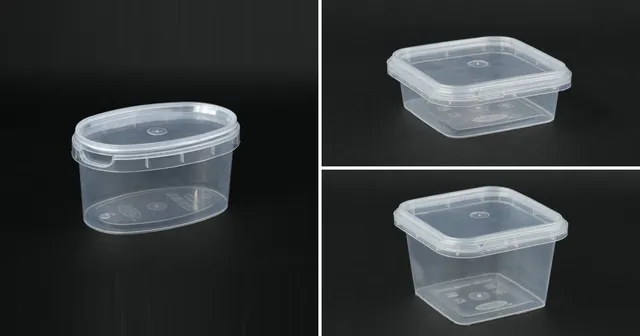
- Square, oval or round?
- Matching the pack to the dairy product
- Tamper evidence for retail dairy
- Condensation, lids and printing
- What to ask a supplier
- Questions buyers ask
- Ordering dairy containers
An ice cream tub is filled soft, hardened in a blast freezer, stacked in a cold store, carried in a freezer van, pulled in and out of a parlour display cabinet, and finally carried home in a shopping bag. Curd, shrikhand and paneer tubs do the chilled version of the same trip.
This guide is for ice-cream parlours, dairy brands and shrikhand or curd makers choosing that container: which plastics hold up in a freezer, what cold-chain temperatures the pack has to survive, why shape matters in a cabinet, and what to ask a supplier before a bulk order.
Key takeaways
- FSSAI's storage handbook says freezers must be kept at or below −18 °C and chilled deliveries at or below +5 °C. Your container has to be tough at both.
- Plain polypropylene homopolymer turns brittle in the cold. Freezer-grade PP is usually a copolymer with a rubbery phase that stays tough far below freezer temperature, so ask which grade you are getting.
- Temperature swings (heat shock) are the main cause of icy ice cream. A well-fitting lid limits how much each swing reaches the product.
- Square tubs use cabinet and carton space better than round ones; oval tubs are a presentation choice.
- FSSAI's packaging rules list PP and HDPE containers among the suitable packs for milk products, and require food to be packed tamper-proof.
The temperatures a dairy pack has to survive
FSSAI's handbook on safe storage, distribution and transportation of food says freezers must be kept at or below −18 °C. It says frozen food deliveries should be no warmer than −18 °C and chilled deliveries no warmer than +5 °C, with anything at the wrong temperature rejected. Refrigerated stores should run at 0 to 5 °C. The same handbook also warns against overloading freezers and refrigerators, and against double stacking in refrigerators, because both block the cold air.
Ice cream makers work colder than that. In the University of Guelph's Ice Cream Technology e-Book, Professor H. Douglas Goff describes hardening packaged ice cream in a blast freezer at −30 to −40 °C. He notes that below about −25 °C the product is stable for indefinite periods without ice crystal growth. Retail is warmer again: the International Dairy Foods Association says a supermarket freezer case should not be above −12 °C, with −18 °C or colder the best temperature for storage.
Why freezer-grade usually means PP copolymer
Plastics have a glass transition: a temperature band below which it goes from tough and slightly flexible to hard and glassy. For a freezer tub, the question is whether the pack is still tough at −18 °C or colder.
Polypropylene homopolymer is not enough on its own. NETZSCH's polymer data puts the glass transition of isotactic PP at −20 to +20 °C. It also notes that most PP types are copolymerised with polyethylene to lower that transition and improve impact strength at low temperatures. Research in the International Journal of Molecular Sciences describes PP homopolymer's impact resistance as poor at room and low temperatures. It then explains that a dispersed ethylene-propylene rubber phase, with a glass transition typically around −40 to −50 °C, dramatically improves impact strength. That rubbery phase is why "impact copolymer" PP is the usual choice for tubs that live in a freezer.
There is a trade-off with clarity. A Dow patent on containers for low-temperature use sets it out: PP homopolymers and random copolymers give stiffness and clarity but poor impact at low temperatures, while impact-modified grades can lose modulus and clarity. A very clear tub and a very tough freezer tub pull in different directions. If you want both, ask the supplier which grade they are proposing and test a sample.
Polystyrene is a different case. Its glass transition is around 100 °C, and the Polymer Science Learning Center at the University of Southern Mississippi explains that a polymer cooled below its glass transition becomes hard and brittle, like glass. Plain polystyrene is already glassy at room temperature and stays that way in the freezer. PET is also used well below its glass transition, which the food grade plastic containers guide gives as 67 to 80 °C. That doesn't automatically make a PET tub fragile, but it does mean a drop test at freezer temperature is worth more than a data sheet.
Our catalogue covers food-grade PP, HDPE and clear PET, but the dairy listings don't state the polymer part by part, so this guide won't claim one. Ask any supplier, us included, to name the polymer and grade in writing.
Heat shock: why ice cream turns icy
In the Guelph e-Book's chapter on ice cream shelf life, Goff calls heat shock, meaning large temperature swings, "the greatest culprit" behind the coarse, icy texture. When the temperature rises, the smaller ice crystals melt. When it falls again, the water doesn't form new crystals. It freezes onto the larger ones, so there are fewer crystals and each one is bigger. He adds that refrigeration cycles and automatic defrost cause some swings, but that mishandling, such as tubs left on a loading dock or in a shopping bag, is "probably the biggest culprit".
Peer-reviewed work shows the effect under controlled conditions. In a Journal of Dairy Science study from South Dakota State University, ice cream was stored at −28.9 °C, then switched between −23.3 and −12.2 °C every 24 hours for four weeks. Ice crystal size changed measurably under that cycling, though the sensory panel in that study didn't detect a difference.
The container can't stop a freezer cycling, but it can limit how much each swing reaches the product:
- A lid that seats fully keeps warm, moist air off the surface each time the cabinet opens. The IDFA's advice to consumers to press wrap directly on the surface of opened ice cream is aimed at the same problem.
- Consistent fill below the rim leaves the lid something to seal against instead of pressing on soft product.
Stacking in cold stores, vans and display cabinets
Goff's list of factors that affect hardening includes the size of the container. It also covers stacking containers or bundles so air can circulate, avoiding "dead air" spaces, with round versus square packages as his example, and bundling only after hardening, because a shrink-wrapped bundle freezes as one larger mass. The FSSAI handbook makes the same point for storage: don't overload the freezer.
For a buyer, that means testing a loaded stack in your own freezer for a week, measuring the cabinet to see how many tubs fit per row and layer, and preferring capacities that share one footprint so they stack as a single column.
Square, oval or round?
On a flat shelf, square tubs fit side by side with no gaps. A round tub of the same width leaves the corners empty, so it covers about 79% (π/4) of the square it sits in. Oval tubs fall between the two and are mainly a presentation choice for the take-home parlour pack.
The dairy range here has both:
| Product | Capacity | Dimensions | Shape | Closure |
|---|---|---|---|---|
| TSC-250S square tamper-proof container | 250 ml | 100 × 100 × 40 mm | Square | Tamper-evident |
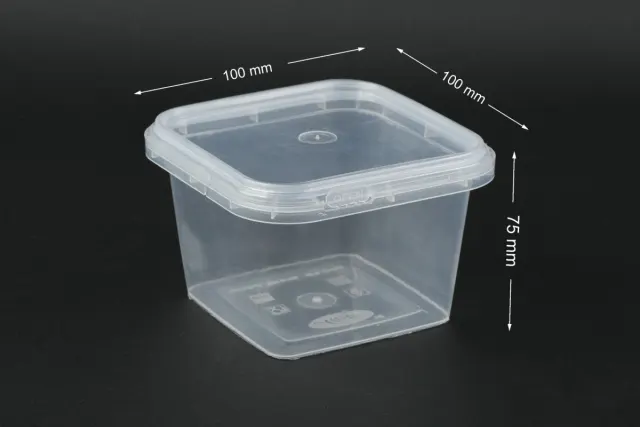
| TSC-500S square tamper-proof container | 500 ml | 100 × 100 × 75 mm | Square | Tamper-evident |
| IC-101 oval tamper-proof ice cream container | 500 ml | 100 × 120 × 80 mm | Oval | Tamper-evident |
| IC-102 oval tamper-proof ice cream container | 1200 ml | Confirm with us | Oval | Tamper-evident |
The two square tubs share a 100 × 100 mm footprint, so the 250 ml and 500 ml stack in one column and sit in the same cabinet slot. They suit curd, shrikhand and paneer as well as single-serve ice cream. For the IC-102, confirm dimensions against a physical sample before planning cabinet layouts.
Matching the pack to the dairy product
| Product | Storage | What matters most in the container |
|---|---|---|
| Ice cream, frozen dessert | Freezer, at or below −18 °C | Low-temperature impact, lid fit, stacking |
| Curd, dahi | Chilled, 0 to 5 °C | Tamper evidence, lid that survives condensation |
| Shrikhand | Chilled | Tamper evidence, a clean scoopable shape |
| Paneer | Chilled | Footprint that suits the block, secure lid |
| Butter, ghee | As your product label states | Grease resistance of the print; if you fill warm, the material's temperature limit |
FSSAI's packaging regulations give a suggestive list of packs for milk and milk products that includes HDPE or PP containers, rigid PET containers with plastic closures, and thermoformed cups with peel-off lids. The same regulations require food to be packed in a "clean, hygienic and tamper-proof package or container". The broader rules on what food grade means, migration limits and the documents to ask for are covered in the food grade plastic containers guide and aren't repeated here.
One labelling point matters to ice-cream makers in particular. Ice cream and frozen dessert are separate categories. The FSSAI Labelling and Display Regulations require a frozen dessert or frozen confection to carry the declaration that it is "made with ___ Edible Vegetable Oil/and Vegetable Fat". The same regulations say special storage conditions must be stated on the label if the expiry date depends on them. Leave space for both in the artwork, and check the current text before printing.
Tamper evidence for retail dairy
A curd or shrikhand tub on a shop shelf gets handled by customers before anyone buys it. A tamper-evident closure shows at a glance that the pack hasn't been opened since it was filled. All four tubs in the dairy range are tamper-evident. The reasoning behind the feature, and how a buyer should check it, is covered in the tamper-proof dates box guide. With frozen and chilled dairy, test it cold: fill the tub, freeze or chill it, then check that the band still breaks cleanly and visibly on first opening.
Condensation, lids and printing
A tub taken from a −18 °C freezer into a warm, humid shop gathers condensation on its outside. The same happens in a curd cabinet every time the door opens. That affects two things.
Lid fit. Water collects in the gap between lid and rim. A lid that seats fully and evenly keeps that water on the outside of the seal. Test lid fit on a frozen tub, not a room-temperature one.
Decoration. PP is nonpolar and, NETZSCH notes, cannot be bonded or painted without pre-treatment. That is why print adhesion on PP depends on how the surface is prepared. Decoration here is done in-house by screen printing, dry offset printing and shrink sleeving. Whichever you use, run a wet-rub test on a sample that has been through a freeze-and-sweat cycle. FSSAI's packaging regulations also say printing inks on food packages must conform to IS 15495 and that the printed surface must not come into direct contact with the food. Ink choice, print methods and artwork are covered in the custom printed plastic containers guide.
What to ask a supplier
- Which polymer and grade is this part moulded in? For freezer use, ask specifically whether it is a PP impact copolymer, and for its low-temperature impact data.
- Has the tub been drop-tested at freezer temperature? If not, fill one, freeze it to −18 °C and drop it from counter height.
- Does the lid carry a loaded stack, and does the tamper band still break cleanly when cold?
- How is the print applied, and has it passed a condensation rub test?
- Which Indian Standard does the material conform to, and is there migration test evidence? The food-grade guide lists the documents.
Questions buyers ask
Can the same tub go in the freezer and the chiller?
Yes, if the material is tough at the freezer end. A tub that survives −18 °C will generally cope with 0 to 5 °C. The other way round isn't guaranteed, so test at the coldest temperature the pack will see.
Why did our ice cream turn icy when the recipe didn't change?
Most likely because of temperature swings somewhere between your cold store and the customer's freezer. Goff's advice is to keep storage temperatures low and constant. A well-fitting lid and stackable tubs help. Educating distributors and parlours about heat shock helps more.
Ordering dairy containers
Tell us the product, fill volume, storage temperature and cabinet dimensions, and we will suggest tubs from the square and oval range, with printing if you need it. New customers get a low MOQ on a first order, so you can test tubs in your own freezer before committing to a full run. See the dairy and ice cream container range or send your product details for samples from the Dadra works.
Tell us the product, the quantity and the city it ships to.
We reply from the Dadra works with part options and a wholesale quote, usually within one business day.
Keep reading
Food Grade Plastic Containers: How to Choose the Right Container for Your Business
What food grade means under FSSAI rules in India, which plastics suit hot, cold and frozen foods, and the documents to ask a supplier for.
Custom Printed Plastic Containers: Screen, Offset, Sleeve or Label?
How screen printing, dry offset, shrink sleeves, labels, IML and moulded embossing compare on plastic tubs, plus artwork files and the Indian ink rules.
Tamper-Proof Dates Box: Benefits & Best Packaging for Dates and Dry Fruits
Why dates and dry fruits need a tamper-evident box: storage science, FSSAI labelling, and how to choose between three 750 ml dates boxes.