
Plastic Saree Box vs Cardboard Box: Which Is Better?
Plastic or cardboard for saree packaging? Compare humidity, visibility, reuse, printing and India's plastic rules before placing an order.
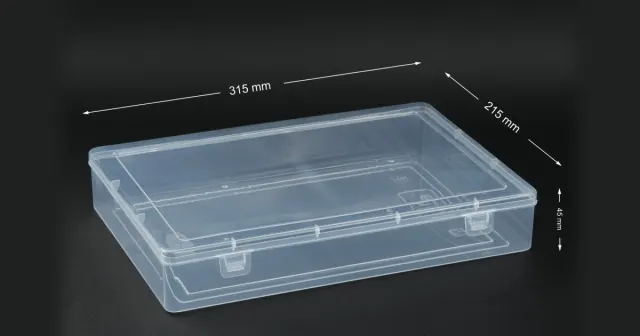
In this guide
Cardboard is cheaper per piece and easier to print. Plastic survives humidity, shows the saree without being opened and comes back for a second season. Both statements are true, which is why the question keeps coming up.
The short answer: a moulded plastic box is the better primary pack for sarees in a humid market, and corrugated board is the better outer carton for shipping them. Most shops end up using both, in that order. Here is the reasoning, category by category.
Key takeaways
- Paper fibres weaken as humidity rises, and corrugated board loses compression strength with it — a real risk in coastal and monsoon markets.
- A clear plastic box lets staff identify a piece without opening it, which means less handling of the fabric.
- Board prints better and stores flat before use; plastic reuses better and wipes clean.
- India's single-use plastic ban list does not name rigid boxes, but rigid plastic packaging is Category I under producer responsibility rules.
- Best practice for despatch: a plastic box for the saree, inside a corrugated carton for the courier.
Humidity: the decisive difference
Corrugated board gets weaker as the air gets damper. Research at Clemson University found that above 30% relative humidity, paper fibres are affected and the top-to-bottom compression strength of corrugated boxes falls, with the decline steepening as humidity climbs; the study tested around 3,000 boxes between 30% and 90% RH.
For a saree retailer in Surat, Mumbai or anywhere along the coast, that is not a laboratory concern. It is the stack of boxed stock in a godown through a monsoon, and the bottom carton in that stack carrying the weight of the ones above it. A moulded box does not soften as the air changes.
Verdict: plastic, decisively, anywhere humidity swings.
Visibility and handling
A clear box answers "which saree is this?" without a lid coming off. Board answers it with a label, or by being opened.
That has a fabric-care consequence, not just a speed one. Every unnecessary opening means a piece is unfolded and refolded, and the Canadian Conservation Institute notes that sharp creases can fracture fibres along fold lines under stress, recommending that folded textiles be repositioned periodically rather than left in the same crease.
Verdict: plastic, unless the pack is printed and never reopened before sale.
Printing and presentation
Board wins here. A carton can be printed edge to edge, in full colour, cheaply, and a printed carton looks like a branded product rather than a container.
Plastic is decorated differently: screen printing, dry offset and shrink sleeving are all available, and a sleeve can cover the whole surface. But covering a clear box removes the visibility you bought it for, so most retailers use a smaller mark.
Verdict: cardboard, when the artwork matters more than seeing the saree.
Reuse and the second season
A plastic saree box is still a saree box after the customer has taken it home, and again when the shop stores stock in it next year. It wipes clean. Board absorbs what it meets, softens at the corners with handling, and ages badly once it has been damp.
There is a conservation angle too. The CCI recommends sealing off acidic or emissive materials — it warns that wood and wood products emit harmful volatiles — and museum practice for long-term textile storage is unbuffered, acid-free tissue rather than ordinary paper. Not every carton is acidic, but ordinary board is not chosen for chemical neutrality, whereas the polymers used for saree boxes are on the National Park Service's list of safer plastics for storage, which excludes PVC.
Verdict: plastic, for anything kept beyond the sale.
Cost and storage before use
Board is cheaper per piece to buy and ships flat, so a thousand cartons take a fraction of the room a thousand moulded boxes do, and are assembled as needed. Against that, plastic's cost is spread over more uses, and a reused box has no replacement cost at all.
We do not publish prices here because both depend on quantity, size and decoration. The honest framing is that board wins on the first invoice and plastic wins on cost per use — how quickly that crosses over depends on whether your boxes come back.
Verdict: cardboard on day one; plastic over a season, if it is reused.
What the rules say
Plastic packaging in India sits inside a regulatory framework that has been tightening, and a buyer should know where rigid boxes fall.
The single-use plastic ban that took effect on 1 July 2022 lists specific items: cutlery, plates, cups, glasses, straws, trays, wrapping films around sweet boxes, stirrers, plastic or PVC banners under 100 micron, and others, as set out in the Gazette notification of 12 August 2021. Rigid boxes and containers are not named on that list. That is a statement about the list, not legal advice or a permanent exemption — rules change, and a buyer should check the current position.
Separately, producer responsibility applies. The CPCB's guidance confirms that Category I covers rigid plastic packaging under the EPR guidelines notified on 16 February 2022, with micro and small brand owners exempted from the obligation. Newer amendments go further: an analysis of the Plastic Waste Management (Amendment) Rules 2026 reports mandatory recycled content for Category I rigid packaging starting at 30% in 2025-26 and rising to 60% by 2028-29.
Verdict: not a win for either. Board carries its own waste obligations, and rigid plastic is regulated rather than prohibited.
The comparison in one table
| Moulded plastic box | Corrugated / cardboard box | |
|---|---|---|
| Humidity | Unaffected | Loses compression strength as RH rises |
| Contents visible | Yes, in clear PET or translucent PP | No, unless a window is cut |
| Reuse | Many seasons, wipes clean | Limited, softens with handling |
| Printing | Screen, dry offset, shrink sleeve | Full surface, full colour, cheap |
| Storage before use | Takes shelf space assembled | Ships and stores flat |
| Cost | Higher per piece, lower per use | Lower per piece |
| Best role | The pack the saree lives in | The carton the pack ships in |
Who should choose what
Retailers in humid or coastal markets: plastic for the primary pack. The humidity finding alone decides it.
Shops whose packaging is their branding: printed board for presentation, or a plastic box with a printed mark if customers keep the pack.
Online sellers: both. A plastic box or pouch protects and displays the saree; a corrugated outer takes the courier's handling and the shipping label.
Wholesalers moving stock between cities: plastic inside, board outside, every time.
Questions buyers ask
Is plastic packaging worse for the environment than cardboard?
They fail differently. Board is easier to recycle in most Indian cities; a moulded box is more likely to be reused many times before disposal, and reuse avoids the whole replacement cycle. The regulatory answer is that rigid plastic packaging carries producer responsibility obligations, which is a real cost rather than a moral argument.
Can I use a cardboard box inside a plastic one, or the other way round?
Plastic inside board is the useful order: the saree is protected from moisture and visible, and the carton takes the knocks and the label.
Does a plastic box need a liner or tissue?
Tissue is worth using for heavy or embroidered pieces, to pad folds. Museum practice is neutral-pH, unbuffered acid-free tissue rather than ordinary paper.
Choosing for your stock
If you are weighing this up, the deciding question is usually whether packs come back to you. If they do, the plastic box pays for itself; if they do not, board may be enough. Compare PET and PP if you have already decided on plastic, read how to choose a manufacturer before ordering, or see the saree box range and ask us for samples.
Tell us the product, the quantity and the city it ships to.
We reply from the Dadra works with part options and a wholesale quote, usually within one business day.
Keep reading
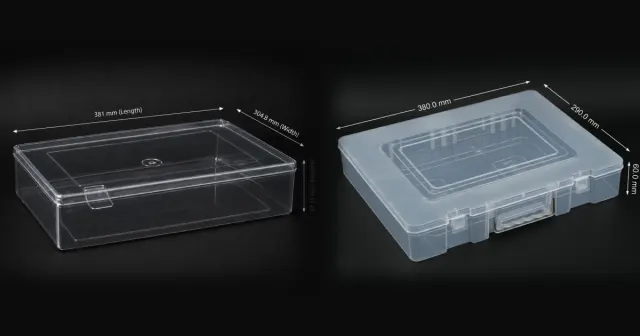
PET vs PP Saree Box: Which Is Better for Saree Packaging?
PET or PP for saree boxes? Compare clarity, weight, stiffness, heat behaviour and recycling codes, with the sizes each material is moulded in.
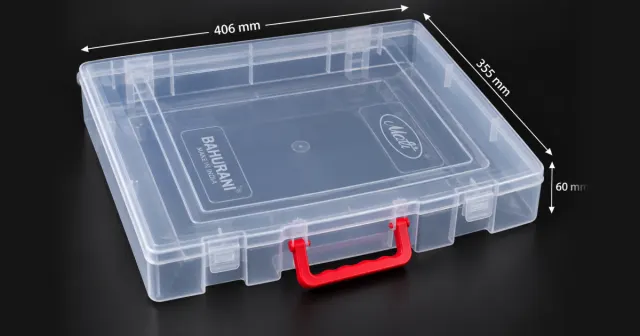
Plastic Saree Box Manufacturer in India: Complete Buying Guide
How to choose a plastic saree box manufacturer in India: PET and PP formats, measured sizes, decoration, samples and the questions to ask.
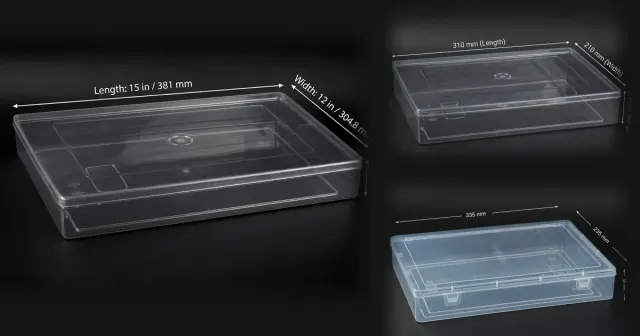
Plastic Saree Box Sizes: How to Choose the Right Size for Your Saree
Measure the folded saree, then match it: trade sizes, measured millimetres and depths for all twelve saree box and pouch parts, with a size table.