
Chocolate Box Packaging: Clear Gift Boxes for Hampers, Diwali and Weddings
How to pack chocolate for gifting in India: bloom, heat and humidity, clear rigid boxes vs cartons, inserts, tamper evidence and FSSAI label rules.
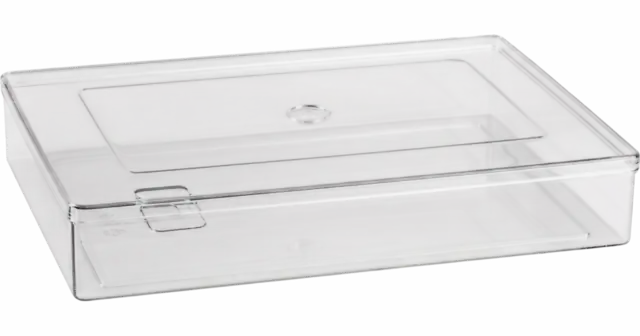
In this guide
- What chocolate needs from its packaging
- Storage temperature, and what Indian summers do to it
- What a box can and cannot do
- Clear rigid box, cardboard, or window carton
- Inserts, trays and liners
- Gifting presentation and reuse
- Tamper evidence
- The FSSAI rules that apply
- Planning for Diwali and the wedding season
- Questions buyers ask
- Ordering chocolate boxes
Chocolate is one of the few gifts that can spoil its own presentation. Hand-finished pralines can leave the kitchen glossy and arrive at a wedding streaked grey, with nothing wrong in the recipe. The cause is almost always heat, humidity or time in the wrong place, and the packaging decides how much of that the chocolate sees.
This guide is for chocolatiers, home chocolate businesses and hamper makers choosing a gift box: what chocolate actually needs from its packaging, how a clear rigid box compares with cardboard and window cartons, and the FSSAI rules that apply once the box is sealed and sold.
Key takeaways
- The white or grey film on chocolate is bloom. Fat bloom comes from heat and temperature swings; sugar bloom comes from moisture. Neither makes chocolate unsafe, but both spoil a gift.
- Extension guidance is to store chocolate at about 18–21 °C and below 50–55% relative humidity, away from light and strong odours.
- Well-tempered chocolate melts at roughly 30–34.5 °C, which is below the temperature at which IMD starts declaring heat waves on the plains.
- A rigid box protects shape and holds a tray in place; it does not cool the chocolate. Plan storage and despatch around the weather.
- FSSAI rules require a tamper-proof package, and a transparent outer box can spare you repeating labels only if the inner labels are readable through it.
What chocolate needs from its packaging
Four things damage chocolate between the tempering bench and the person opening the box.
Heat and temperature swings. Iowa State University Extension describes fat bloom simply: heat causes the cocoa butter to soften, separate and rise to the surface, leaving grey or white streaks. A 2025 perspective in Crystal Growth & Design notes that the stable crystal form of cocoa butter, Form V, melts at around 30.0–34.5 °C, the form that gives good chocolate its snap and its resistance to bloom.
Moisture. Sugar bloom is a different fault. The same Iowa State guidance explains that sugar particles absorb moisture and, when it evaporates, leave sugar crystals on the surface with a blotchy, dusty look. The usual trigger is condensation on a box taken from a fridge into a humid room.
Odours. Cocoa butter absorbs the smells of whatever is nearby. For a gifting business, the risks are a storeroom shared with spices, incense or perfumed hamper fillers.
Light and air. Clemson Cooperative Extension notes that light, like oxygen, contributes to oxidation, and recommends an airtight container kept somewhere dark.
There is a fifth problem specific to filled chocolates: fat migration. Research on pralines published in Molecules in 2024 found that nut-based fillings are especially prone to fat bloom, because liquid oils from the filling migrate through the chocolate shell to the surface. Packaging cannot stop that, but it is a reason to keep filled pieces cooler and to plan a shorter shelf life for them than for solid bars.
It helps to be clear about what bloom is not. Iowa State's guidance is that bloom does not affect the taste or shelf life and does not make chocolate unsafe. It is a presentation fault. For a gift, of course, presentation is the point.
Storage temperature, and what Indian summers do to it
The storage figures are consistent across extension services: 65–70 °F with relative humidity below 50–55%, which is about 18–21 °C. Set that beside the Indian weather and the gap is obvious.
India Meteorological Department considers a heat wave when a station's maximum temperature reaches at least 40 °C on the plains and at least 30 °C in hilly regions, with coastal stations described as in heat wave from 37 °C when the departure from normal is large enough. Those are heat wave levels, not ordinary days, but they sit above chocolate's melting range.
Researchers studying exactly this problem cycled dark chocolate between 20 and 32 °C to simulate storage and transport in tropical regions, and found that the rate of heating and cooling changed how quickly fat bloom formed. So it is not only the peak that matters, but how often the chocolate warms and cools on its way to the customer.
What a box can and cannot do
A rigid gift box holds its shape under a stack of hampers, keeps a tray fixed so pieces do not scuff each other, and, with the lid closed, limits exposure to shop air and neighbouring smells. What it cannot do is insulate. No clear plastic box keeps chocolate below 30 °C in a delivery van in May; that is the job of your storage, despatch timing and, for long journeys, insulated shipping.
If heat forces you to refrigerate, Clemson's advice is to wrap the chocolate tightly against odours and moisture. A closed box inside a sealed bag does that for gifting stock. Let it reach room temperature before opening, or condensation forms and sugar bloom follows.
Clear rigid box, cardboard, or window carton
| Clear rigid plastic box | Printed cardboard box | Cardboard with a window | |
|---|---|---|---|
| Shows the chocolates | Fully, from every side | No, unless opened | Through the window only |
| Crush resistance in a hamper | High | Depends on board grade | Depends on board grade |
| Reacts to humidity | No | Board can take up moisture | Board can take up moisture |
| Light reaching the chocolate | Most of it | Very little | Some |
| Reuse after the gift | Common, as a storage box | Rarely | Rarely |
| Tamper evidence | Can be moulded into the closure | Needs a seal or sleeve | Needs a seal or sleeve |
The trade-off with a clear box is light: the transparency that sells the chocolates also lets light reach them, so keep boxed stock in a dark store and display it as it sells. Wrapping individual pieces in foil deals with light and scuffing at once. The wider plastic-versus-board question is covered in plastic saree box vs cardboard box.
Inserts, trays and liners
The box is the outer shell. What sits inside matters just as much for a chocolate assortment:
- Cavity trays. A moulded tray with one pocket per piece stops pralines touching and is the standard for an assortment. Measure the tray against the box's internal space before you order either.
- Paper cups and liners. Glassine or paper cups in a flat base work for truffles and mixed shapes, and let you vary the assortment by season.
- Divided layouts for hampers. A large box can hold bars, a small tray of pralines and dry fruit side by side. Keep nut-filled pieces apart from plain chocolate, given the migration problem above.
- Fillers. Shredded paper and fabric look festive but can carry scent. Test them sealed in the box with your chocolate for a few days before a festive run.
Whatever touches the chocolate is food-contact material, which brings in the rules below. Ask whoever supplies your trays and cups to confirm that, in writing.
Gifting presentation and reuse
A clear box does much of the presentation work by itself: the chocolates, the foil, a ribbon. Printing on the lid can carry a brand or a couple's names; the decoration options are covered in custom printed plastic containers. A sturdy clear box is also kept long after the chocolate is eaten, for jewellery, stationery or dry fruit, and the printed lid goes with it. For reuse with food, see food grade plastic containers.
Tamper evidence
The Food Safety and Standards (Packaging) Regulations, 2018 require food to be packed in a clean, hygienic and tamper-proof package or container. For chocolate sold as a gift, a tamper-evident closure does two jobs: it satisfies that requirement without a separate seal, and it tells the recipient, who did not buy the box, that nobody has opened it on the way. How tamper-evident rims work is explained in the tamper-proof dates box guide.
The FSSAI rules that apply
Packaging material. The same packaging regulations require plastics in contact with food to conform to the Indian Standards in Schedule III, such as IS 12252 for PET and IS 10910 for polypropylene, to pass an overall migration limit of 60 mg/kg when tested per IS 9845, and require printing inks on food packages to conform to IS 15495. Ask your supplier which polymer the box is and which standard it meets.
What the label must carry. Under the Food Safety and Standards (Labelling and Display) Regulations, 2020, a pre-packaged food carries the name of the food, ingredients, nutrition information, the veg or non-veg mark, the FSSAI logo and licence or registration number, net quantity, a batch or lot number and date marking, among other items in FSSAI's compendium of the regulations. Special storage conditions must be declared if the date's validity depends on them, which for chocolate argues for printing a storage instruction.
Three provisions in the same document matter directly for gift boxes:
- Transparent outer boxes. Where an outer container is displayed for retail sale, it must carry all the required declarations, except where the outer container is transparent and the declarations on the packages inside are easily readable through it. For a transparent multi-unit pack, at least one inner unit's label must be visible.
- Assorted packs. The shelf life declared on an assorted pack must be that of the product with the earliest shelf life inside it. A hamper with chocolate, dry fruit and biscuits takes the shortest date among them.
- Chocolate itself. FSSAI's chocolate standard caps vegetable fats other than cocoa butter at 5 per cent of the finished product and requires the bold declaration "CONTAINS VEGETABLE FAT IN ADDITION TO COCOA BUTTER" where they are used. The same standard defines filled chocolate, composite chocolate and praline, so check which name fits your product.
The compendium is dated 23 September 2021 and the regulations have been amended since. Check the current text on the FSSAI site, or with a food regulatory consultant, before you finalise a label. None of this is legal advice.
Planning for Diwali and the wedding season
Festive and wedding months compress a year's gifting into a few weeks, and those weeks are busy across the packaging chain too.
- Settle the box and tray first. Build a finished box with your real chocolates and keep it a week in your actual storeroom before committing to quantities.
- Approve printed artwork early. A printed lid adds an approval round and a production step.
- Confirm the despatch date in writing. Lead times vary by season and by whether the part is printed, so ask when you order rather than assuming last year's.
- Boxes early, chocolate late. Chocolate made close to the gifting date spends less time in a warm store.
Questions buyers ask
Can I refrigerate boxed chocolate in summer?
If your room cannot stay cool, a fridge is better than melted stock, but seal the box in a bag first so it does not pick up smells or moisture, and let it return to room temperature before opening. Opening it cold invites condensation and sugar bloom.
Do I need a label on the outer box if every bar inside is labelled?
Under the 2020 labelling regulations, not necessarily, provided the outer box is transparent and the inner labels are easily readable through it. If the inner labels are hidden by a tray, a sleeve or a printed lid, the outer box needs its own.
What size is the CC-101 box?
It is listed at 325 × 235 × 110 mm, rectangular and transparent, with a tamper-evident closure. That is a hamper and assortment size rather than a single-bar box: room for a tray of pralines alongside bars or dry fruit.
Ordering chocolate boxes
Our chocolate packaging range is one part: the CC-101 chocolate packaging box, 325 × 235 × 110 mm, transparent, with a tamper-evident closure, moulded at our works in Dadra, Silvassa. Our decoration is done in-house (screen printing, dry offset printing and shrink sleeving), so ask which suits this box; first orders from new customers start at a low MOQ. Send us the tray or assortment you plan to pack and your festive calendar, and ask for a sample to test with your own chocolate. See the chocolate box range or contact us to talk through a gifting order.
Tell us the product, the quantity and the city it ships to.
We reply from the Dadra works with part options and a wholesale quote, usually within one business day.
Keep reading
Tamper-Proof Dates Box: Benefits & Best Packaging for Dates and Dry Fruits
Why dates and dry fruits need a tamper-evident box: storage science, FSSAI labelling, and how to choose between three 750 ml dates boxes.
Custom Printed Plastic Containers: Screen, Offset, Sleeve or Label?
How screen printing, dry offset, shrink sleeves, labels, IML and moulded embossing compare on plastic tubs, plus artwork files and the Indian ink rules.
Food Grade Plastic Containers: How to Choose the Right Container for Your Business
What food grade means under FSSAI rules in India, which plastics suit hot, cold and frozen foods, and the documents to ask a supplier for.